Episode 1: Parenting, ADHD, Chronic Pain, and Designing Parenthood with Julie Edwards
Prefer to read instead of listen? Jump to the transcript.
Content Warning: This episode includes discussion of cancer, chronic pain, postpartum mental health, and thoughts of suicide in the context of safety planning. Please take care of yourself while you listen.
When Julie Edwards became a parent in March 2020, she was navigating chronic pain after cancer treatment, recovering from a difficult birth, becoming a parent during the earliest days of the COVID-19 pandemic, and eventually discovering that the overwhelm she was experiencing was connected to undiagnosed ADHD. In this conversation, we explore how disability, neurodivergence, and parenthood intersect—and what becomes possible when we stop asking whether parenthood is possible and start asking what it would take to thrive.
In this episode we explore
- Becoming a parent during the earliest days of the ongoing COVID-19 pandemic
- Living with chronic pain after cancer treatment
- Receiving an ADHD diagnosis after becoming a parent
- Sensory overload and executive functioning
- Breastfeeding, postpartum planning, and support
- Disability identity and invisible disability
- Parenting through a neuroaffirming lens
- External supports, body doubling, and motivation
- Designing parenthood around your body, brain, and values
Resources and links
- Postpartum Support International
- TickTime timer (Erica’s timer)
- Cube Timer (Julie’s timer)
- Femme Futures poem by Leah Lakshmi Piepzna-Samarsinha

About Julie
Julie Edwards is an ADHDer, mom of two, and integrative nurse practitioner helping high-achieving women uncover the root cause of focus, mood, and energy struggles. Learn more at her website marisintegrativehealth.com or connect with her on Instagram at @julie_edwards_np.
Disclaimer
The Disabled Parenthood Podcast shares personal stories and educational conversations about disability, pregnancy, parenthood, and family life. The information shared in this episode is not intended as individualized medical advice and should not replace guidance from your own healthcare professionals.
Transcript
Erica Evans (00:00)
Welcome to the Disabled Parenthood Podcast, where we have honest conversations about disability, pregnancy, parenthood, and family life.
Quick note before we start, today’s conversation touches on cancer, chronic pain, postpartum mental health, and thoughts of suicide in the context of safety planning. Take care of yourself as you listen.
Erica Evans (00:17)
Welcome to the Disabled Parenthood Podcast, I am Erica Evans, and today I am talking with my good friend Julie Edwards. Hello, Julie.
Julie Edwards (00:27)
Hi, thank you so much.
Erica Evans (00:29)
I’m super excited about this. You and I have only been friends for six months. Is that it?
Julie Edwards (00:35)
Can we believe that? It feels like a lifetime.
Erica Evans (00:38)
I know, I—
Julie Edwards (00:40)
We’ve accomplished a lot in those short six months.
Erica Evans (00:43)
Yeah. Yeah, for sure. So I’d love for you to share a little bit about yourself and then, we can talk a little bit about your journey to parenthood.
Julie Edwards (00:52)
Yeah, great. Awesome. So I am a mom of two. I have a three year old son and a six year old daughter. And I’m a nurse practitioner. and I had my first baby on March seventh of twenty twenty. So…
Erica Evans (01:18)
Wow.
Julie Edwards (01:19)
Right before the world shut down. So I feel like my journey to parenthood was pretty interesting, as was most people with little kids these days. Like everyone, COVID touched everyone’s stories in all different ways. And mine was in some very particular ways. And so I feel like even though I’m like six years in, I still kind of think of myself as a new parent. And I am a working mom. I work full time and I also have a business that I started in the past six months where I help high-achieving moms who feel scattered and overwhelmed, figure out, you know, what’s causing their symptoms and whether it’s ADHD or hormones. And part of that is because of my own journey with getting diagnosed with ADHD right after my daughter was born, which was not something that I knew about or recognized until then. So since then, I feel like I’ve been on this journey to figure out like how hormones and ADHD fit together and also just figuring out what life looks like as a really busy mom who has like a million things going on and just figuring out what that all looks like. So.
Erica Evans (02:27)
So, so for you, like I think a lot of people, you got diagnosed with ADHD once you became a parent. Before you were diagnosed, how did it shape your journey to becoming a parent and then like when you were pregnant, the postpartum period, how did neurodivergence interact with all of that?
Julie Edwards (02:45)
I love that. And also let me go back a little bit more because I feel like the more I learn about your work and the more I think about different people’s pathway to parenthood, the more different things I connect with that I don’t even always realize. I remember the first time when we talked when you told me your business idea, I was like, Well, I’m not your, you know, target audience because I’m not a disabled parent. And you were like, very nicely, like, well, yes, but also maybe your definition of disabled is, you know, a little bit narrow and maybe there’s other ways that this looks.
And I feel like the more I’ve learned about you and the work you do and things like that, the more I’m like, you’ll say things or you’ll post things on Instagram. And I’m like, my gosh, like why do I, why does this hit me in the feels so hard? And so I feel like now I’ve actually connected like all these other pieces. Maybe that also plays into it. And I’ll back up one second because I also had a cancer diagnosis right after my 30th birthday. And I don’t even know if you know the whole story of it.
Erica Evans (03:40)
No, I didn’t even know that.
Julie Edwards (03:41)
But it was diagnosed, and the treatment was surgery. And thank God the surgery went really well. So I didn’t have to undergo any other treatment. But the surgery was a pretty significant surgery, and it involved taking out about a third of my shoulder blade, my scapula up here. And in order to take that out, I had to cut through basically everything down to my ribcage, all the muscles, and take out a lot of muscles. Yeah. And so this was when I had been a nurse for like six years. I was a brand new nurse practitioner, I was actually in my fellowship training, and this all happened, and the surgery was really tough to heal from. I had so much pain to the point where I was like, Am I even gonna be able to work anymore? Because I was just struggling so much. And now I can look back and see that I think I had developed some really great coping skills and sort of like management techniques for my neurodivergent brain that once chronic pain got added on top of it.
It became really hard to manage. And I remember like by the end of each day, trying to finish my notes, I would just be like, I can’t do it. I just have to go home and lay on an ice pack. There’s no way. And so managing that pain was one of the ways in my life where I felt like I had to come face to face with my capacity and realized that I couldn’t just push through in a certain way. So that was at age 30. Then about like two years later was when I got pregnant with my daughter.
And I still didn’t have great use of my arm or my shoulder. It was still really painful at that point. And so that was even one thing that shaped my journey a little bit because my husband at the time, we weren’t married yet, but we were kind of talking about having kids in the next year or two, maybe. And the doctor was like, you should not think about getting pregnant for at least two years.
And I remember being like, fuck you. Like, who are you oncologist man to tell me like when and where and how? Like none of your business. But also I got what he was saying and took his advice. I was probably going to wait two years anyway. So it was just sort of like don’t tell me what to do. Even getting pregnant was a little bit scary because I was trying to figure out how do I space out my scans? Cause I don’t wanna get a CT scan when I’m newly pregnant. And what if it is a recurrence? Then I need surgery? The thinking about that, added this extra layer that in my mind, you shouldn’t have to think about.
Erica Evans (05:59)
Well, I think most people going into pregnancy, you know, there’s a dominant narrative around what being pregnant is like or what you what people think it should be like. And when you actually drop a real life human being in the middle of that and all of the intricacies and complexities of that person’s life, it frequently doesn’t look like that.
Julie Edwards (06:23)
Very rarely does it, in fact. Exactly. Like I can’t think of very many people that have that classic journey.
Erica Evans (06:29)
So, so, you had that cancer diagnosis, you went through treatment, you got pregnant. Throughout your pregnancy, you were still sort of managing there’s a lot of cognitive work in the like how do I space things, yada, yada, yada. And then also undiagnosed neurodivergence, you know, undiagnosed ADHD. And like you said, the pain, once you layer, like it’s just an added sensory load that can make. Your coping mechanisms really kind of fall apart, and then you became a parent.
Julie Edwards (07:07)
Yeah. I feel like it’s so funny to hear it restated like that it’s a little bit validating because I’m realizing looking back how many layers kind of all happened at once for me, which I feel like often happens because there’s these clusters of life where we go through these huge hormonal transitions and life transitions at the same time. What bigger hormonal and brain and life transition can you go through than pregnancy and parenthood?
So it was the parenthood thing, the pain thing on top of my undiagnosed neurodivergence. And then the birth happened, and then, the last day of the hospital, I remember the pediatrician that came and visited us in the hospital room. We were watching the news from the hospital and I was like, should I still plan on following up with a pediatrician? Like this COVID thing’s kind of weird, if things get worse, should I not go to the pediatrician? And he kind of poo-pooed me and was like, Don’t be silly, don’t be an overreactor. You should absolutely take your child to the pediatrician. And I was like, okay. And then of course, two days later, the world completely shut down and my pediatrician’s office shut down for a week because someone got COVID. So it was just a weird time. And I ended up having a really rough labor and delivery that ended up fine, but I was, I think, pushing for almost four hours. And so I just had a really rough postpartum recovery and was in a lot of pain as well. And then was breastfeeding on top of it. and ended up with really bad mastitis and like this open wound on my breast that was draining. And it was like, you know, then I was like triple feeding, doing all that stuff to try to keep my supply up and I was a little bit rigid, which is funny now to think about, but I was very stuck on this idea that I wanted to breastfeed. And now looking back, I’m like, that was literal torture. I really wish I had—I did it differently my second time around. but I was really stuck on this idea of exclusively breastfeeding to the point where I was in so much pain because my shoulder wasn’t used to it…
Erica Evans (09:02) so
You were still in a lot of ways still recovering use all of that musculature and the structure of your body.
Julie Edwards (09:09)
Yes. And I, you know, I thought like for example, I thought I would be like a baby wearing mom, you know, that was something I had always envisioned. Despite all of my research and figuring out my registry, some of the baby carriers I had I still couldn’t wear because they would just pull and create so much pain on my shoulder. And so I like trying to breastfeed, I would have these really elaborate contraptions to try to support my shoulder and arm. So it’s just, it was pretty miserable the first few weeks. The first twelve weeks were really hard. My mom got stuck at my house for the first eight weeks because she couldn’t fly, which was the absolute best. I was like, thank God for that because I don’t know if I could have done it without her. ‘Cause my husband had COVID like half the time. It was just—
Erica Evans (09:55)
God.
Julie Edwards (09:56)
He has a suppressed immune system. So it was just, it was rough. So thank God she got trapped there. And when I was kind of ready to go back to work because I was like, I feel like mentally really not okay and I need adult contact and structure. And so it was just gonna be remote. And so I went back to work I think 20 hours a week the first week. And within that first few months of returning to work, it was really hard to navigate. I almost felt like I preferred being at work because it was so hard to be breastfeeding and dealing with pain and all of this pain and negative physical sensations were associated with my baby, which was really hard and made me feel guilty. But also I was just in so much discomfort, physically because of the mastitis and the shoulder. And then, you know, the isolation. I’m an extreme extrovert. So the isolation on top of that was just really hard. And I remember at about six to eight weeks, postpartum, I had reached out to a nurse practitioner that I wanted to see. I had had some struggles with anxiety, as a younger adult teenager. And I was like, maybe this is just postpartum anxiety. I treat a lot of postpartum anxiety. I knew what that looked like. Maybe that’s what this is. I’m just gonna see her and see what she thinks.
And I met with her and the question she was asking me, I almost felt like she was asking me about things like mania or bipolar or something like that. And I was like, ‘Are you, are you thinking I’m bipolar here? Like is that where you’re going with this line of questioning? Cause I’m I’m not. I’m very familiar and I definitely, I don’t think that’s my story. So, what are you thinking here?’ And she was like, ‘No, no, no. I actually think you have ADHD.’ And I was instantly sort of like, I don’t think that’s right. Like I think you’re confused. Now I had been told twice before that I had had ADHD by a therapist and someone at my college. They had—
Erica Evans (11:48)
So, many years ago, many years prior, okay.
Julie Edwards (11:53)
My sister has ADHD. I’m pretty sure my dad had ADHD. So this was not like a new idea, but I was very resistant to it for the same reason that I think a lot of high functioning women are, is that I got A pluses and I did really well in school. I went to a great grad school and always excelled at work. So I just kind of felt disqualified from that diagnosis. So she said, I think you should try treating this. I really think that what you’re describing, this restless energy, this anxiety is actually internal hyperactivity that comes with ADHD. And I think that this might have kind of gotten unmasked by your postpartum hormone drop. And it kind of blew my mind a little bit because I was like, how, why didn’t I think of that? And then I really did a deep dive into hormones and neurodivergence and mental health and the more I read, the more I knew about it, the more I was like, a hundred percent this is me. This is definitely what’s happening to me. Which was really validating, but also like I was still breastfeeding at the time. I didn’t want to go on any medication. So I didn’t really have any tools to deal with it yet. It was just the validation piece. So I still felt really overwhelmed by my life and like really ill equipped for parenthood. And I remember my mom is one of my biggest moral supports. And I would tell her all the time, Mom, I just, I see other people that just look like they were meant to do this. And like I’m not sure if I was, you know, which is what a painful thing. Like I have so much compassion for me back then because it was, it was really hard. Like I really did have that thought of was I just not supposed to do this? was I just not supposed to, you know, maybe some people love being moms and I just don’t.
And so I did a lot of therapy and that helped a lot because I think a lot of it was just the trauma of those first eight weeks of postpartum and everything that I went through. And, I just needed longer to bond with my daughter. I just needed we had some things that were really great bonds, but when you have that much pain, it just I think it it’s different than like I didn’t have that experience where I like had the baby and was like, you know, that put the baby on your chest and you feel bliss like you were always meant to be. Like that just didn’t happen.
Erica Evans (14:02)
Yeah. Yeah. And I think people expect that that’s what’s supposed to happen, but I think for most people that doesn’t. Doesn’t mean there’s and that doesn’t mean there’s anything wrong. your brain is like still half an outer space when that baby is put on your chest. And one thing my my spouse and I would talk about is in choosing to become parents, we are choosing to be in a relationship—
Julie Edwards (14:09)
I agree with you.
Erica Evans (14:27)
with somebody we don’t even know for the rest of our lives. You don’t even know this person yet. Like, hi baby, who are you? I don’t know you. You’re a stranger, you know? Yeah.
I feel like labor, birth, if you choose to be a nursing parent afterwards, these are all and even if you don’t, like caring for another human who’s a baby, there’s a lot of sensory input involved in that. A lot of people talk about feeling touched out. I mean, neurodivergent or not. I think that’s probably true for most new parents.
When you look back on that experience now, labor, birth, postpartum, what do you think would have made a big difference for you?
Julie Edwards (15:10)
I love that question because I honestly haven’t really thought about it until starting to talk to you about what you provide on that pathway to parenthood and thinking about my God, what would I have wanted to add as support?
So I think like the sensory piece of it, I do think I did things differently the second time, but I hadn’t really thought about it. And I think some of it was just really concrete things of feeling like I had more autonomy, I went into it with a good amount of autonomy being a healthcare provider. I’ve always felt pretty comfortable in medical settings. So that really maybe helped me compensate in some ways because I was a little more prepped and primed for advocating for myself and asking what I need and things like that. Because it’s something that I coach patients to do for themselves so often that I feel like it’s a little bit wired in. So I’m grateful for that because I think I would answer that question really differently if I didn’t have the professional experience that I have. But I also think that the sensory piece, I wish I had thought, or not I wish, but now what I would, you know, think about that differently especially in the breastfeeding front. What is that going to be like sensory-wise? And what is my capacity? And how am I going to know that maybe I’m reaching that capacity? And what do I need? What boundaries can I place to protect my calm and my peace. And I felt like I knew how to do that. I did enough sort of like listening to different podcasts and training and stuff to sort of help me through the labor and delivery process. But then postpartum I kind of all went out the window. Cause I think a lot of people also, and me being one of them, so I did so much prep for the pregnancy and birth, but I didn’t necessarily do as much prep for what it would be like postpartum, which is hard. You don’t know what to expect.
But I feel like if I could wave a magic wand and wish anything for my 2020 self, I would have gotten a doula. And, and maybe even more importantly, if I had to choose, I probably would have done a postpartum doula. Someone who really knew how my brain worked could have maybe helped me step out of those stresses for a moment and really think what value is guiding your decisions right now? Because I think part of my a little bit of a rigid and hyper focused brain is if I set a goal, I’m going to meet that goal, no one get in my way. At all costs I’m going to get to that goal.
Erica Evans (17:44)
Yeah.
Julie Edwards (17:44)
Even at the expense of myself, yes. So, and I feel like if someone had been sort of like, Okay, let’s examine what are your values in this ’cause a couple of people did say you should just stop breastfeeding and I was oppositionally immediately like, Don’t tell me what to do. But if someone had sort of been able to really help me tease apart, what are my values in this situation and what kind of mom do I want to show up as, I may have had a little bit more cognitive flexibility that I could have, you know, used in that situation.
The other thing though about the sensory piece, which I really hadn’t thought about, is the last three days before I was induced, they put me on this protein-only diet, which is I still don’t quite understand the logic behind that. It’s like I was allowed to eat protein and fruit, I think that was it, chicken breast and fruit, no salt or anything. It was because I had really extreme swelling. And I, I feel like there were think that’s an example of one thing that was imposed on me that for me, maybe for someone else that wouldn’t be a huge deal. But for me, restricting the types of foods that I could eat was so hard and miserable. Those were the longest three days of my life because I’m a very sensory person and food is really important to me. And being restricted like that was such a
such a thing that looking back, I don’t know that that was quite necessary for me to put myself through that just additional discomfort in addition to being nine months pregnant, you know?
Erica Evans (19:15)
It’s interesting. You’re the second person this week, who has talked about how a lot of people plan for birth. Even my experience was the same. Like if I’m gonna choose to do something or go into something, I am gonna turn over every stone. I wanna learn everything there is about it from every different angle, right? Like I did all the things during my pregnancy, I really wanted to know what am I getting into and how can I relate to this experience of being in labor and giving birth and really dove deep into that. And I have a history of mental health issues. I have premenstrual dysphoric disorder and I knew that I would be at an increased risk for postnatal mood disorders. And so I was really worried about that. And someone was like, Well, have you thought about putting together a safety plan? And I was like, this is interesting. Yeah, I should do that. And talked with my therapist and did that. And then I had this little gathering with a couple of friends and somebody who was also a postpartum doula talked about some postpartum planning. It was the first time when I was like, beyond, freeze a bunch of meals while you’re still pregnant so that you can have that later. Beyond that, who is in your support system? And what are your values? And like all of those things. And I was like, this is important. And just yesterday I was talking to a local home birth midwife, and she’s like, you know, a lot of people forget about the what happens when you go home part.
Julie Edwards (20:44)
Yes. Yes. And there’s so much you can plan for. And I almost feel like a birth plan, right, the birth plan is great, but also it’s the process of making the birth plan that is often more impactful. Yeah. Yeah. And I–
Erica Evans (20:59)
…meaningful. Mm-hmm. You start to get clear on things. Even if you don’t know exactly what it’s going to look like, it’s not the first time you’re engaging with these topics or thoughts or ideas or decisions.
Julie Edwards (21:12)
Yes, exactly. And you identify the values behind it. What is important to me about this? What are the non-negotiables versus what are the things that are nice to have and not need to have? And I think that even if you had asked me, you know, right before I had my daughter, did you do postpartum planning?
Did you think about what you were going to prepare? I had worked with a lot of perinatal mental health patients before. So I think I might have even, you know, printed out the PSI postpartum mental health planning and thought through it with my mom. You know, people get postpartum psychosis and people get postpartum depression. And if things get really bad, then I would know what to do. But those weren’t necessarily the things that were going to be risky for me. For me, it was a very different set of concerns. And so I wish I had just taken a little bit more time to explore how do I know, not just like if the train is completely off the rails, but how do I know I’m just not doing well.
I’m just veering a little bit because you also don’t have to be at a ten out of ten severity in order to ask for support. and that difference, the difference between being a six out of ten and an eight out of ten might be the difference between me really enjoying that postpartum experience versus surviving it, you know? And so I didn’t ask for what I needed because I was like, well, it’s not that bad. It’s fine. And it was COVID too. So I think that was part of it. Everyone was miserable. So I think it was sort of like, what are even the things that we would do? Because my normal sort of coping skills weren’t available too.
Erica Evans (22:41)
Right, right, right, yeah. with the safety planning, in step one, it’s warning signs. A warning sign is something I think feel or do that’s a s you a suicidal thought may start to develop. I remember when I was filling that out, it was like, Okay, what are those signs? And even before we get to an extreme place, but just the warning signs,
And I think I put something like flying off the handle easily, experiencing the spectrum of emotions very quickly within a short time frame is a sign that my capacity is really reduced right now, you know, or not feeling understood and having a difficult time articulating things. I’m a pretty articulate person, but when things are going bad, it’s really, really hard for me to communicate.
Julie Edwards (23:23)
Exactly. Those are such specific warning signs that are not necessarily typical things you read about, you don’t know them unless you know them. And so if you’re not really paying attention, they’re easy to miss. That’s one of the areas where I think social media can be kind of helpful because for me in that time, I mean there’s an upside and a downside, but in a situation like that where we were so isolated and there wasn’t really a lot of chance to go out to a new mom’s group or like you know, baby yoga and like see other new moms, like that was often how I would identify different things that were happening for me. I would sort of zone out completely. Like if I was overstimulated, I would, I mean, almost just dissociate. And my husband would like talking to me and I’d be like, What? I think my brain is broken. and I didn’t know what that was. And then, you know, postpartum rage, like I remember sitting on my couch and pumping, and my cat stepped on my leg. And I had this thought, I’m going to murder the cat. I would like it to die. it was so angry and tense and so like outside of my normal realm of experience of emotions. And that’s one example, but I would get those rage feelings, quite often, which was a new experience for me, which now I think is getting more attention. But things like that. It shows up so differently for different people.
I didn’t know how to recognize oversimulation for myself yet, because that wasn’t something that I really had spent a lot of time on. I was about eight weeks postpartum. Classically women with ADHD tend to have less of the hyperactivity side of things. And often it’s internal hyperactivity. And that was the first time in my life where external hyperactivity showed up. I had never been like that before. But I couldn’t sit still. People would ask me to sit down. I’d be like, I can’t. Even if I was so tired, it was just that, you know, driven by a motor feeling. I literally feel like I just could not stop moving. And it was kind of productive too. I would get a lot of shit done. So I was like, maybe this is working for me. where it got really interesting for me though, is I had this diagnosis. I was like, I don’t know what I want to do about this diagnosis yet, other than use it as a vehicle to get more information about how my brain works and understand more about how I can support myself because it also reframed a lot of previous experiences I had had. There were some experiences in college that looking back, I’m like, that poor girl, she had flaming hot ADHD. And like that’s why that happened, you know? And, and I knew sort of like the more I really, I went on a deep dive learning about hormones and that, kind of ended up, pushing me into a whole nother career specialization.
But realizing that this is probably, I mean, it might get better, but usually postpartum is sort of a preview of what’s to come in perimenopause. And now I see that with patients all the time. But it’s you’re pulling back the curtain for a second, as Sarah Gottfried says, and then you, you know, you close it back up and it’s coming in perimenopause. So I sort of knew that as I was learning more about hormones and I really want to figure this out as much as I can, also knowing that the mental load of parenting was only gonna probably continue.
Especially if I wanted to have more children, which I thought I did. And so I was learning a lot, reading a lot, reading a ton about ADHD and women. And then I think it was three or four months, right after I went back to work, I got a promotion, which was great, but it changed my role from mostly clinical to mostly administrative and leadership and program management. And I did not expect how that would change the way that my brain worked because when you’re seeing patients all day, you have 20 minutes to do this and then you do the note and you sign it and you move on to this. There’s structure inherent to your day with patients. And I wasn’t very good at that. Like I would finish all my notes that night or whatever, but it created some structure and it was a deadline. And I knew what I was supposed to be doing with my time. Whereas when I got this promotion, it was like, here’s this X amount of hours.
And here’s this outcome. You design your day around how you need to get there. And while I really loved that, it was also at that point when my brain was readjusting, I realized how much it just shined a light on the ADHD symptoms that I had sort of been compensating for. And I really liked that a lot. I loved that role. And so I was like, I want to figure out how to make sure I can use my brain in the best way possible.
And I know I’m gonna need more structure because it’s not gonna be created for me. So then I like it became my personal hobby to figure out what planner system makes sense and how to have like I have all these timers on my desk and I you know, like all of the things that help out.
Erica Evans (27:54)
Things all the ADHDers end up trying, yeah.
Julie Edwards (27:58)
Exactly.
Which really helped and kind of became like a fun new side quest challenge of what’s the hack that’s gonna make my brain focused today?
Erica Evans (28:07)
Just to jump back for a second, what did you worry about before becoming a parent?
Julie Edwards (28:13)
I was very worried about pain.
Erica Evans (28:17)
Because of the shoulder that you were—
Julie Edwards (28:18)
Because of the shoulder. Yeah. I was worried what if I can’t lift her? What if I can’t? I wish that your baby registry had been around back then because I didn’t know how to figure out how to design around my capacity. Before I bought a baby carrier, I remember making a spreadsheet of what’s the weight of each baby carrier, without the baby in it.
And I ranked them. And then what’s the ergonomics of it? They have that one where you can reach through and like the price, what makes sense? Just trying to figure out how can I do this? Because if I wanna be able to take my baby to the pediatrician alone, I have to be able to carry that. And I so that freaked me out just because I was very used to being autonomous and not having to ask people for help. And I didn’t necessarily want to be in a position where I couldn’t do the thing I wanted to do.
Erica Evans (29:04)
Hmm. Yeah, I did a similar thing. I remember I was doing lots of research to understand what was the lightest weight newborn car seat on the market. And I’m like, that’s the one I’m gonna buy. And it was super expensive. And I know people say not to buy secondhand car seats, but I did. It was from somebody that I trusted and it was still within its expiration timeline.
I don’t wanna spend an arm and a leg, but I need something that’s going to be lightweight. and now, gosh, now they make the new—we have the we also gotten like the one of those 360 car seats, and that’s what my child uses now. And it’s great because I could just turn him towards me and he hops out. Now they actually make newborn car seats that are also 360. I’m like, where was that three years ago?
Julie Edwards (29:48)
I really wish they had had that. I don’t even think they had the turning ones when my daughter was born. When those came out for my son, I was like, that would have helped me so much.
Erica Evans (29:54)
So much. Yeah, when you were talking about how you were looking for the lightest weight baby carrier because you didn’t want to have to ask for help, a lot of times non-disabled people, the first time they experience limitation is when they become a parent.
Julie Edwards (30:16)
Yep, that’s so true.
Erica Evans (30:17)
Right. And it’s the asking for help part or like the not having their full capacity or things being unpredictable. And you were sort of navigating you didn’t identify as a disabled person. So like you probably identified as a non disabled person. And you’re like in that moment of new parenthood. I don’t know how to relate to this. And you’re also in pain. There’s so many, so many layers there.
Julie Edwards (30:42)
Plus COVID. It really is. I hadn’t fully conceptualized how many layers there were to that transition for me until today, I think.
Erica Evans (30:50)
Now that you are a parent, what surprised you?
Julie Edwards (30:54)
Hmm. It’s so funny. It’s hard to even remember what it was like pre because it feels like a different version of me completely. And I sort of I think because my identity was so wrapped up in my work up until being a mom, I sort of thought that that would continue to be my identity, working mom. And I don’t know. I feel like that’s gone through iterations of what does that mean? You know, there’s been points where I feel like I’ve leaned into that really hard. And then there’s other times where I feel like you just—different things have to take priority, but I remember like right before I had my baby, my first baby, I was doing an interview. I was interviewing another nurse practitioner, and she was telling me about the position that she was leaving. And she said something about how there was like on call hours and she was like I have three kids I just can’t do on call hours that’s just something sort of like that’s just not a reasonable expectation for me. I didn’t say anything in the moment, but after she left I turned to my colleague and I remember being like that’s interesting. Like I can totally see why that’s a really valid viewpoint. But why would you say that in a job interview?
You know, why would you put it up front for everyone to see that you’re not willing to do anything for your job? You know, even if that’s the reality that was before I became a parent. Yeah. And yeah, no, I, there—right? It’s all those thoughts you have before that you’re like, oh dear, like you are you don’t even know anything. But I remember being really perplexed by it, well that’s fine that she feels that way, but why would you tell anyone that? Why would you tell an employer that?
Erica Evans (32:18)
That was before you became a parent.
Julie Edwards (32:36)
And I said it to my colleague and he actually had a baby. He had just had a baby within the past year. And he was like, Ask me that question again in like six months. And I was like, You’re probably right. I’ll probably, you know, that’s probably a little bit of patriarchy in my brain, I think, like asking that question for sure. but I didn’t really understand it. And that conversation stuck in my brain so much because now I feel like, my gosh, not that that’s right or wrong, but just the perspectives have opened up on what the different variations on the theme of parenthood and balancing career can look like.
Erica Evans (33:09)
And then on top of it too, I think as a neurodivergent person and a parent and a professional, there’s a lot of executive functioning that all of those roles in your life are asking of you. And I can’t like and I well, I can imagine I’m living it, but like I it’s no wonder that that’s when a lot of a lot of people end up getting a late diagnosed ADHD situation.
Julie Edwards (33:26)
Yes.
Erica Evans (33:38)
Right. You know, because your capacity is stretched so much. And exactly. Right. Yeah.
Julie Edwards (33:46)
I think it’s funny because, you know, as I’m talking with you now about it, I actually feel like I can even more understand why I asked that question. Because I think also with the type of brain I have, there are, I mean, I’m sure a lot of people can relate to this, but if there are days where I’m working all day and the kids are at school or with their dad or whatever,
Some of those are days that I really look forward to. Like sometimes at the end of a weekend of parenting two kids with not a lot of structure, I’m like, I cannot wait to get back to work the next day. And part of that is like I’m very grateful to have multiple jobs that I really love and find a lot of value in. I’m very fortunate with that. But also unstructured time and like the mental load of parenthood is so much bigger now than the mental load of work.
And this is one of the big beefs I have about this whole old thinking of if you’re on ADHD meds, take them during the week and not during the weekend. And I remember, like, for a mom, that’s laughable. My ADHD symptoms are so much more problematic on a weekend than they are during a workday because there’s no structure and I have a million things going on. if there’s one day out of the medication where I
need to be medicated to function, if that day it would be a Saturday or a Sunday, a hundred percent, I have no question. Or a snow day when my kids get canceled and I have to figure out all these things. That’s an ADHD brain nightmare. And working at least we know what to expect.
Erica Evans (35:16)
It’s funny because I was just talking about this with my provider. As you know, I just recently started ADHD meds and we’re still tweaking my dosages and stuff. And she had me on a long acting thing for a little while, and then we decided to try short acting in the morning and at lunchtime. And then like I told her, I accidentally took my afternoon dose too late in the day, but I ended up having like the smoothest four PM to bedtime.
I was even solo parenting that night and I was like, everything went so well. I even got the dishes done. How did that even happen? And she’s like, Erica, you know, medication’s not just for work and school. Maybe that’s a sign, you know, you also need it—like there’s domestic labor involved and that also involves a lot of focus and executive functioning skills. So maybe we go back to a long acting and then you do a short acting later in the afternoon. And so that’s literally what I just started this week. I’m on day two. But like Yeah.
Julie Edwards (36:14)
I applaud your provider for recognizing that.
Erica Evans (36:16)
Right. Well, you know, I mean, and she’s the one who said, I’m not surprised. You’ve coped with your ADHD your whole life. And parenthood is just breaking down the skills you had that helped because there’s, it’s more than just yourself, more variables than just yourself. You know. Exactly. and it’s and that’s really challenging to manage.
Julie Edwards (36:39)
I think that’s where the pain example is more defined, right? When you have pain, you sort of quickly learn this whole, I know what my capacity is, pacing, you know, if I do all this in the morning, I might not be able to do something in the afternoon because I might be in pain. And I think that’s sometimes for me at least more concrete, whereas ADHD was a completely new skill set there of figuring out capacity. And like you said, some—I tell patients this all the time. Like, if you’re gonna try it for the first time, like try it on a weekend when you have your kids home with you, because that’s the time when you probably need it. Or what’s the time in your day where you feel like you’re gonna jump out a window? Is it afternoon, like bedtime? Like get some support in that area, whatever it looks like, whether medication or not. That’s how I have to think about it, what’s my capacity? And at the end of a weekend, that capacity is pretty fried. But it’s harder, I think, to get your head around.
If no one’s laid that out for you, what does your mental capacity look like, not just your physical?
Erica Evans (37:31)
Yeah, your mental and emotional capacity. What’s been easier than expected for you?
Julie Edwards (37:40)
You know what actually has been easier for me than I really expected is how much easier socialization got when I became a parent. I mentioned I’m a very extroverted person. And that’s often how I compensated for my ADHD in the past is by creating social structure. Like when I was in fifth grade, I started this thing called the Quiz Sheet Club.
And all my friends would come to my house and we would study together. And I was a really good student. So they would all joke. I remember one of my friends’ moms was like, You have to go to Quiz Sheet Club at Julie’s house because your grades are way better since you’ve been going. Cause I was good at tutoring them, you know. But also for me, it was I know I’m gonna get a good grade. I need to study, but I’m not gonna do it unless there’s a social event with it. And so, you know, that was really smart of my fourth grade brain. And I continued to do that. I was always always forming study groups and study buddies and stuff. I mean, you and me in a lot of ways, that’s what we do for each other. We help each other stay on task. And but in adult life, like I would say from grad school until parenthood, like when there wasn’t a lot of social structure, and I also moved in that time, I had friends, but I didn’t have a lot of standing social structure.
And our societies now are set up in a way where in order to have social contact, there’s so much executive function that’s needed to to plan it and to set a time and where are we gonna meet and all these things. and if you have a brain that doesn’t have much executive functioning, that’s a lot to manage. Once I got into parenthood, now there’s more of a social structure in my life that I didn’t realize is a little bit easier. I have my mom friends and I run into friends at daycare pickup and at the bus stop every morning I get a little bit of interaction with my neighbors. There’s just kind of these like built in community pieces that were harder to find before kids. And I also feel like I found my people. I know who the other like neurodivergent moms are at, you know, daycare pickup and I have a friend actually who we’ve promised each other that we always text each other before pajama day or bring your red bear to school day or all this stuff that you have to remember a million things. We always text each other before those days because one of us has always forgotten one of the days. There’s more like a built in community that has made things a little bit easier, which is a really pleasant surprise.
Erica Evans (39:43)
Yeah. Yeah. I hadn’t thought about it that way, but that makes a lot of sense because you know, in the world of coaching, we talk about the different types of motivation. And I’ve I have always felt like intrinsic motivation is held on this pedestal. and I don’t think and now I am just articulating this for the first time, so like
Maybe there is something problematic about what I’m about to say, but maybe not. I don’t know. I don’t think that’s how I say this? I think it’s an ableist way of looking at motivation. Because I think for some people, and maybe for certain types of neurodivergent people, external motivators, extrinsic motivation is just perfectly exactly what that person needs. And I don’t want to assign judgment or value to different types of motivation in that way. And so hearing your story, I’m like, social connection and community as a motivator or as providing some kind of structure makes a lot of sense to me. and I think that’s actually really wise.
You and I both know it’s really hard to have that intrinsic motivation sometimes. And we need that social connection is a huge motivator. And rather than viewing that as somehow less than some other person’s form of motivation, the wisdom of the neurodivergent brain, finding exactly what it needs to function. Let’s celebrate that. It’s disability pride month, come on! You know?
Julie Edwards (41:13)
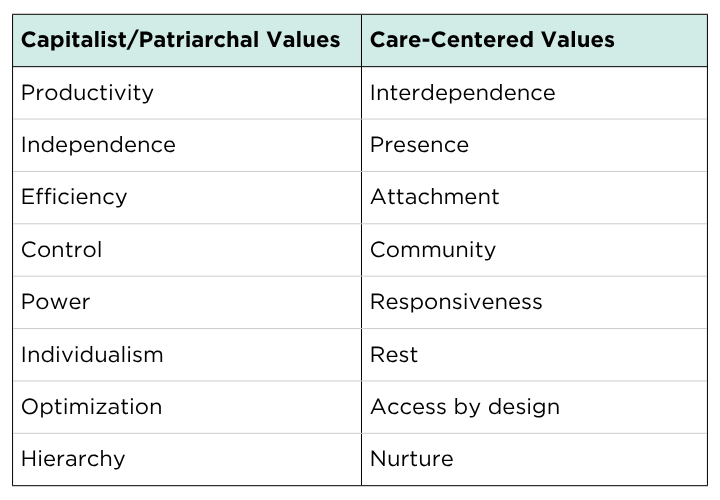
You’re totally right. I think you’re onto something. I think there’s a lot of wisdom there. It’s a very limiting way of thinking of motivation. Like I picture a car just trying so hard to get started, but it has no gas in the tank or it has square wheels on it. And like you can grunt and push all you want, but it’s just not gonna go. in a lot of ways that’s how an ADHD brain is. Whereas if you can create the right structure or extrinsic situation, whether it be social or setting a timer to create a deadline, it’s pouring gas in the tank to create a little bit of dopamine fuel and grease the wheels a little bit and get moving. And you’re right. we put this sort of I’m even gonna like maybe it’s a little bit capitalist. I don’t know if you’re just the person that can start the engine on your own, that there’s something better about that.
Erica Evans (42:03)
There’s an individualistic perspective on that versus where community care is great and like the way that we show up for each other is sometimes literally just showing up to be together because that’s what the other person needs is another person there, right? The whole body doubling—similar I think back to ten year old me. Maybe I didn’t have the quiz sheet club, but I had a very messy bedroom and I hated cleaning it. And I would call my best friend who lived across the street and say, Hey Steph, can you come over?
And just hang out and she’d sit on my bed. And I didn’t say come over and hang out so I could clean my room. But what inevitably would happen is she’d sit on my bed and we’d just be chatting. And I would just get up and start buzzing around cleaning my room. And by the end of the afternoon hanging out, like and it’s like let’s literally that was just body doubling. I look at my room.
Julie Edwards (42:50)
Body doubling. Yeah. I love that. We naturally find these things.
Erica Evans (42:52)
Yeah. Right. And that’s why I also wonder if that’s why it gets missed. Because there are ways that we find to cope.
Julie Edwards (43:00)
Yep. Mm-hmm. We compensate and like how much effort we put into as, particularly for I think after postpartum and you know, different stages of life. But if you’re pouring 75% of your energy into all of these compensatory mechanisms, like arranging body doubling and setting timers and like like I love when I diagnose, and doing sort of like a diagnostic interview to try to figure out if a patient has ADHD, like, How many timers do you have set on your phone? Or like, you know, like how are you—people will typically ask, are you late to things? And they’ll say no. And it’s well, How do you make sure you’re not late? And they’ll tell you Well, I have six post-it notes on my door to help me remember this. And then I get to my car and I have Siri set up to automate voice to tell me where to go. And then I have someone call me on Tuesdays to remind me of this . they have these magnificent systems set up to keep themselves functioning, but like
That is so much energy that is exhausting to maintain. And if that sort of energy could be put somewhere else, what else could we be accomplishing, you know?
Erica Evans (44:07)
Yeah. We’ve talked about how your experience was that you became a parent and got your diagnosis pretty closely after that because everything kind of fell apart for you. The coping strategies, the systems they just don’t work the same anymore.
Julie Edwards (44:24)
Yep, all my sticky notes, my whole system had to be redesigned. Right.
Erica Evans (44:27)
Okay. I also wonder though, what in your experience has living the way you lived for all those years before you became a parent and all the coping strategies you have, has that given you something that you use in your life as a parent at all?
Julie Edwards (44:51)
Absolutely. I love that question so much because there’s so many things that were liabilities. That’s how I framed it at the time. And I don’t think that’s what they were, but I thought they were liabilities I had to compensate for or figure out strategies for or skills I had to develop or ways to be creative in order to get where I got with my brain and limitations or just different ways of thinking.
And now when I parent, there are so many ways that I think about that. My husband and I both have ADHD. So time will tell, you know, what kind of brains my kids have. But I’m also just gonna prepare that like let’s be parents that are neuroaffirming no matter what the brain type we end up with. I have some gut feelings, but we’ll let them, you know, tell their own stories. And my daughter, for example, there’s a morning where we can’t get ready, we can’t get ready, and then like the bus is coming in five minutes and now we need to get ready. My, you know, I see how in that situation without a lot of resources, it can just be frustrating or whatever. And I feel like my brain instantly, because I’ve been sort of problem solving around my brain for my whole life, but also more intentionally in the past six years, very intentionally, my brain instantly goes to What is the barrier that’s stopping her capacity to be able to do something that I know she can do? Cause I’ve seen her do it before. I talk to her about this stuff all the time. We make little checklists together. Or we talk about different sensory inputs. She has, you know, I share it with her because I love it too. We have a weighted, a lap pad, a weighted blanket, all these fidgets, different like, you know, that regardless of what kind of brain type my kid has, these are all just really good tools in the toolbox to have that I didn’t know were there. Or eating crunchy food if I’m feeling stressed. There’s so many things that now that I know more about neurodiversity that are so many tools in the toolbox. And so when parenting, now I’m constantly looking for How could we set up this spot in our house more so they can do XYZ and that can be exhausting too. I’m not trying to say I’m a master at all this because I also well, you know, let me alphabetize my kids’ bookshelf. But then meanwhile I haven’t ordered checks in like six months.
Erica Evans (46:59)
Yeah.
Julie Edwards (47:01)
And this is an active problem and I haven’t done it, but I can organize my kids’ bookshelf. So not saying that this is all beneficial, but I feel like my brain can be really creative in those types of situations like what’s the problem that your brain’s seeing and how can you adapt to it? Things like that.
Erica Evans (47:17)
Well what I think is really valuable that I’m hearing is you want to be a neuroaffirming parent to your kid, regardless of their neurotype. And even though you use the word problem, you’re not looking at it as a deficit. You’re not looking at it as, why can’t my kid just do this? Right. You’re like, the type of support my kid needs is just different.
Yep. Let’s figure out what that is. You understand because you live it that there are certain kinds of accommodations or adaptations that make a big difference.
Julie Edwards (47:54)
Exactly. I think, you know, there’s an element of privilege that comes with being like a high performing female ADHD because I, you know, was afforded a lot of privilege that someone who had a more classic presentation or didn’t have the same strengths that I did would have and that’s a very different story. And I think that’s part of honestly what delayed when someone told me in college that I had ADHD. I saw other people around me that their life had been ruined by their ADHD symptoms and it hadn’t been treated. And I saw how much pain it caused for them and how much difficulty they were having. And I felt like I didn’t qualify for that support because I was getting good grades and my life was okay. You know what I mean?
I think there’s a way to recognize that the impact can look different. And that doesn’t mean either experience is more or less valid than the other. And it still means that whatever your neurotype is, whatever your limitation is, that there’s probably some strategy that would make things easier for you and be more supportive to you if we, ideally if we didn’t live in a society that really supported one type of brain and thinking and way of doing things, but it it hits on so many different things that we need to personalize and figure out for our own brains or our kids’ brains or whatever.
Erica Evans (49:08)
I think the analogy you used earlier about the car, how there are environmental things you can set up or whatever that pour gas in the car. I look at that as there’s additive things that support or like changes around you you can make, but then there’s also taking away barriers. And I think that’s what medication helps with a lot of the time. It’s like, okay, if that car’s not starting ’cause it needs gas,
But also it can’t go anywhere because the garage door is closed. Okay, well let’s get the medicine that’s gonna open the garage door every day so that the car can go once there’s gas in it. Right. Like I think there’s always multiple ways to to help support a person.
I’m so glad you got back to that you felt like you were disqualified from this diagnosis at the end because I wanted to talk about that again. I think a lot of people don’t think they can call themselves disabled.
Julie Edwards (50:00)
Yeah. Right. That’s a really good point. The essence of I think, when I talk about how—remember the first few times we talked, I kept saying, but I’m not your ideal, I’m not disabled. I’m not, you know. And I kept feeling the need to tell you that because I’m like, but I’m, you know, when it comes from a place of I have too much privilege and I don’t wanna harm someone who has less privilege, but it’s like such a misguided mindset, you know.
Erica Evans (50:30)
Yeah, so there’s this poem by a disabled writer that I love named Leah Lakshmi Piepsza-Samarsinha, and it’s in their book Tongue Breaker. And this poem is about the newly disabled. Like they don’t think they can call themselves that, you know?
I think that speaks to something here where there are people with ADHD who failed out of high school, who are not the kids who got A pluses. And that’s a completely different experience. And so when you called out, I have a lot of privilege because this is the way it was like for me, which is very different from somebody else. I think that’s true. And it doesn’t disqualify the fact that you also deviate from the societal norm.
Julie Edwards (51:12)
Yes. Exactly.
Erica Evans (51:14)
Right? That’s—divergent. Neuro—you diverge from the norm.
Julie Edwards (51:24)
Like that in itself, I think, is so validating for especially I’ll just speak from my own experience. When you’ve had an internalized struggle and you’ve been able to hold up appearances, there’s another level of pain that comes with that because you don’t feel like you can be your most authentic self because it’s not what people expect. And so I think that just means there’s
so much more freedom and healing for people that have that, you know, it’s kind of the same as an invisible disability. When people don’t see it and validate it, there’s an added level of shame or stigma of “I went to fucking Yale. Like I can’t talk about being disabled and having neurodiversity.” Like, you know, that’s not—
Erica Evans (52:09)
And statistically, one in four Americans has a disability. Yeah. Right? But it’s this idea that people don’t know they can call themselves that. Yeah. You know, because there’s, I mean, people think disabled’s a bad word and instead they come up with every other word in the book.
And I’m like, it’s not a bad word. It’s a normal variation of humans. We’ve never not been here. Yes. You know? And we’re used to thinking about it as a physical disability. But there’s so many invisible disabilities or dynamic disabilities that people don’t even know about. So yeah. Yeah.
What do you wish someone had told you?
Julie Edwards (52:55)
You know, I think honestly, it’s mostly I think the thing that I wish I could go back and tell myself is to find someone to walk me through the process, you know, to get more support specifically for what I needed. And I think that’s the value in a program like yours or working with a coach like you, or I mean, for me, having a friend like you, we learn to seek people out who can help us with these things and do these things. But I really think so much of it, for me at least, I think we just had this conversation last week where I was like, I think I actually benefit the most from individual coaching because I’m a verbal processor and I need to just have someone who can give me feedback and talk about things. I feel like that’s the same thing with parenting, someone who knows that path and can guide me through like what are those blocks to my capacity that can be removed versus what in the environment could I shift, you know, because oftentimes I have the ideas. I just need someone who knows the framework to like help me get there and ask me the right questions and help me figure out the values underneath. And I think that structure, well, I knew it helped me because that’s what I’ve gotten from therapy or friends or my mom in the past. There’s something specific about coaching to me I think that really supports that and sort of unlocks a new level for me. So I wish I had kind of, you know, known that that was a resource potentially.
Erica Evans (54:28)
Mm-hmm. Yeah. Yeah. One of my coaching mentors used to say that when you sit down with a client, it might be the first time that that person is getting somebody else’s complete undivided attention and they’re meeting them where they are and seeing them as a whole creative person with a lifetime of accumulated wisdom.
rather than, you know, running their own agenda or being distracted or what have you. And I know I benefit from it, but that’s yeah, there’s nothing like having that kind of support. Okay, before we wrap up, What would you want someone who’s wondering whether parenthood is possible for them to know?
Julie Edwards (55:11)
Mm. What would I want someone who’s wondering if parenthood is possible to know?
Okay, so when someone asked that question, is parenthood possible for me? Cause I thought about that a lot just because, I thought a lot about is this something I really want versus is this something I’ve just been told that I should want? That was a journey for me. And for me, that was just part of my journey of becoming a feminist, really, was figuring out what does this mean to me and what are my own values versus what I was told to think. And I obviously was able to come to what my values were. But I think it goes back to that capacity versus barriers thing that if it’s if it’s something you want, the question, you know.
Can I become a parent, or should I become a parent, or can I, you know, can I do this? There’s sort of no answer to that question. It’s like an endless loop where for me it creates anxiety and I’m never gonna know the right answer and it’s always gonna be a gray area because I could answer it either way. And so, shifting that question a little bit to what would it look like for me to become a parent in my current body, mind, brain situation and thrive in it? What would that look like?
And I think shifting the question that little bit allows for endless opportunity of what would it look like? And what kind of support would you need to create that? And then you can get to work. It shifts your brain into a whole new—and and you know, the answer doesn’t have to be yes, of course. If that shifts your brain and you’re like, okay, I’m picturing what that would look like and actually I don’t want it, you know, like there could be different ways, but I feel like that’s a more helpful question to shift into.
Erica Evans (56:59)
That’s the premise of a lot of the work that I do with people. We have to design parenthood differently. Right?
Julie Edwards (57:07)
Yes.
Erica Evans (57:09)
Okay. And then the last just for fun thing. What’s bringing you joy these days?
Julie Edwards (57:17)
Can it be really mundane and little? So I have this cube timer around my desk that I’m actually really debating ordering three more of them because I literally carry it around to my different workplaces. Uh-huh. Because you can turn it on its side and it tells you different minutes. And it’s my number one way to get gas in my car right now. If I’m sitting down, I just need to get started and I can’t get started. And now even to the point now where I’ve replicated it to like, I’ll tell Siri to set a five minute timer. So I feel like I need one of these in every room of my house because it’s my get up and go meter. And I just think it’s the coolest tool ever and so easy.
Erica Evans (57:54)
Mm-hmm. Nice. I’ve got something similar right here. Mine’s a…
Julie Edwards (58:00)
Yes. Ooh, that has more options. All right, wait, I might need to upgrade.
Erica Evans (58:01)
Yes. And it’s magnetic. So you can stick it to something.
Julie Edwards (58:08)
My God. All right, send me the link after this, please.
Erica Evans (58:11)
Okay. I will. Well, thank you, thank you, thank you so much, Julie, for being my first guest on the Disabled Parenthood podcast. I’m honored. Here we are. Yeah. And—
Julie Edwards (58:24)
To me it’s really fun to have this conversation, honestly, because it’s just the stuff that you and I talk about all the time, but being asked questions about it and examining parenthood from that lens is a really, a really cool thing to do. So I really appreciate it.
Erica Evans (58:37)
Thank you for listening to the Disabled Parenthood Podcast. If this conversation resonated with you, I’d love for you to follow the show and share it with someone who might find it helpful. You can find episode notes, resources, and more about the show at disabledparenthood.com.
Thanks for being here.
Erica Evans (58:53)
How did that feel?
Julie Edwards (58:54)
It felt like we were just talking, like we could have kept going. Like we could probably have three more of those easily.
Erica Evans (58:58)
But we’re both verbal processors.
Julie Edwards (59:00)
Yeah we are.